01
Visibility
Know what AI systems, datasets, vendors, tools, and agents are already in use.
The toolkit translates Ungoverned Intelligence into practical instruments: registers, checklists, scorecards, dashboards, matrices, and roadmaps for leaders building governance capability.
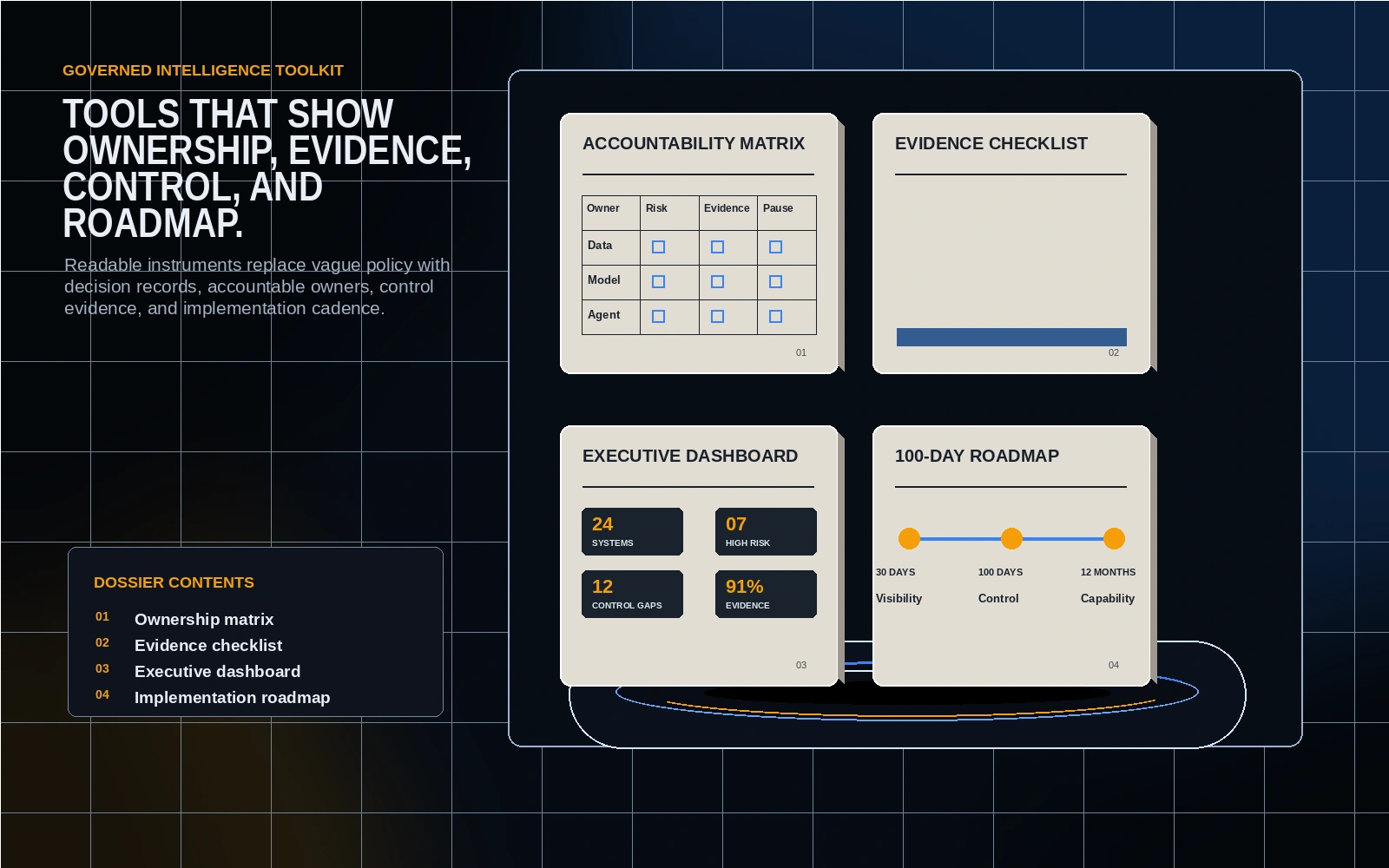
Toolkit artifacts
A register, matrix, checklist, dashboard, and roadmap system tied to the book’s argument.
The toolkit is organized around the operating sequence leaders need most: see what exists, assign ownership, preserve evidence, set boundaries, monitor risk, and build durable governance routines.
01
Know what AI systems, datasets, vendors, tools, and agents are already in use.
02
Name accountable owners before decisions, incidents, or disputes occur.
03
Preserve the records needed to reconstruct decisions and actions.
04
Translate policy into enforceable, measured, evidenced, and reviewable controls.
05
Define what agents can see, say, change, trigger, remember, delegate, and approve.
06
Give leaders a view of systems, risks, owners, incidents, exceptions, and remediation.
07
Move from first visibility to minimum viable governance and durable capability.
01
Accountability
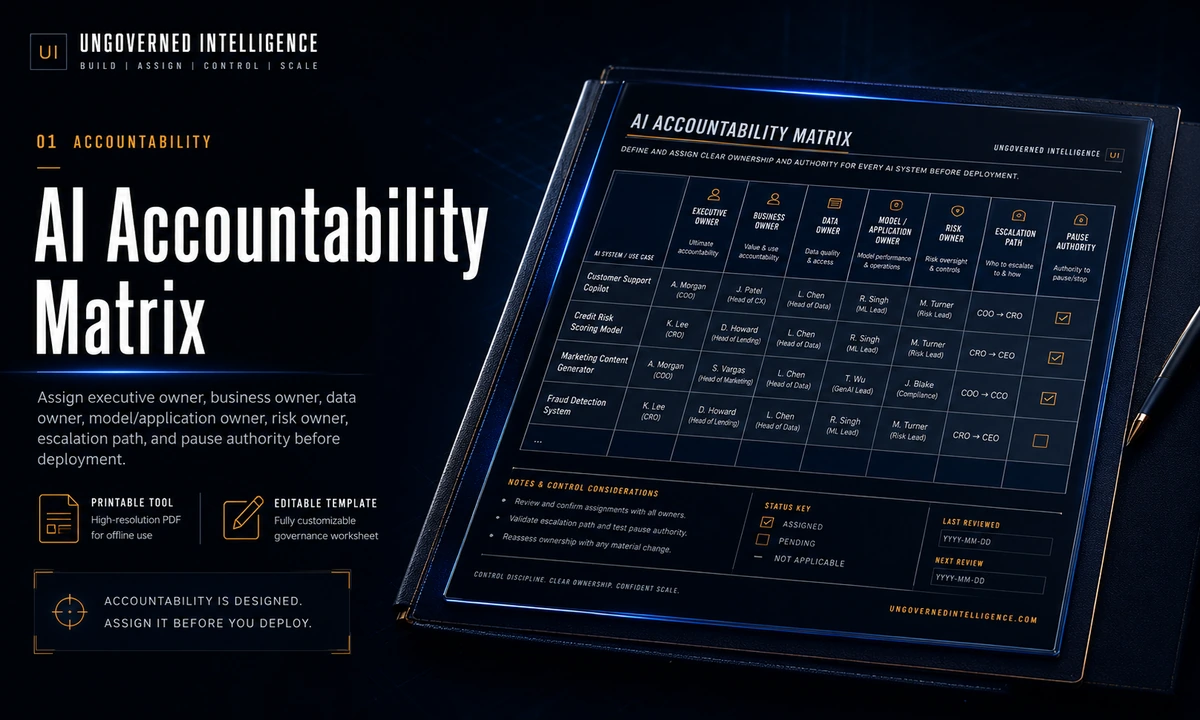
Assign executive owner, business owner, data owner, model/application owner, risk owner, escalation path, and pause authority before deployment.
Companion download
02
Trust Stack
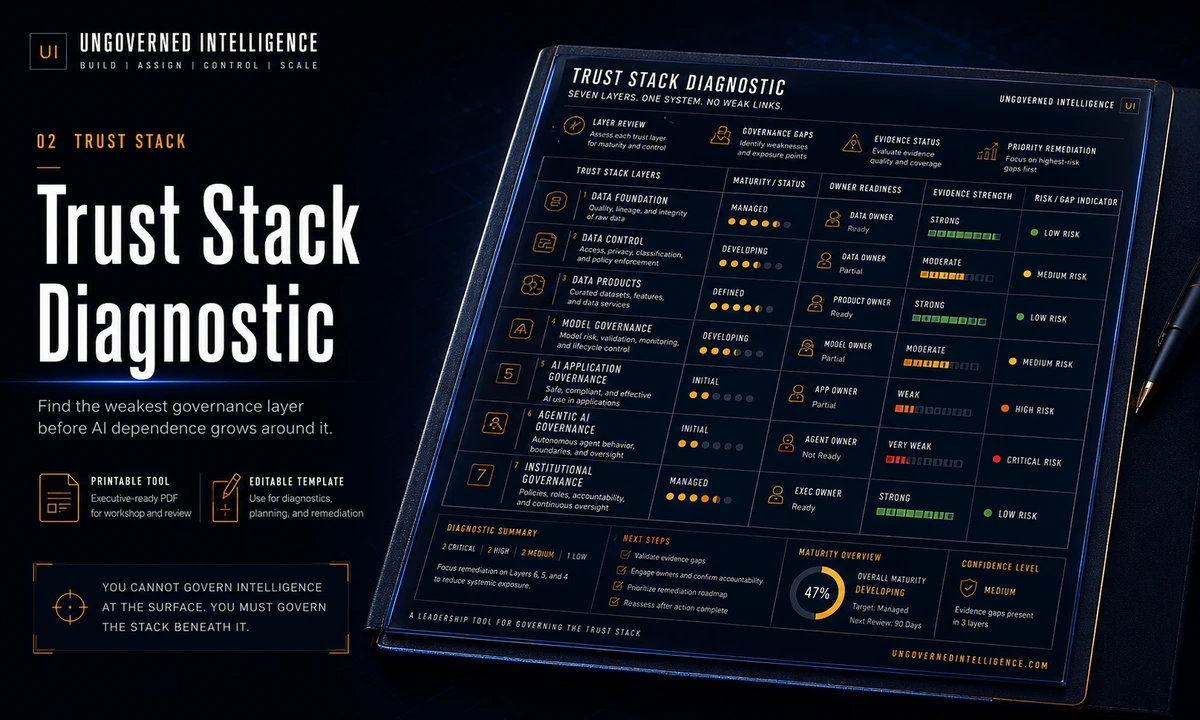
Find the weakest governance layer before AI dependence grows around it.
Companion download
03
Leadership
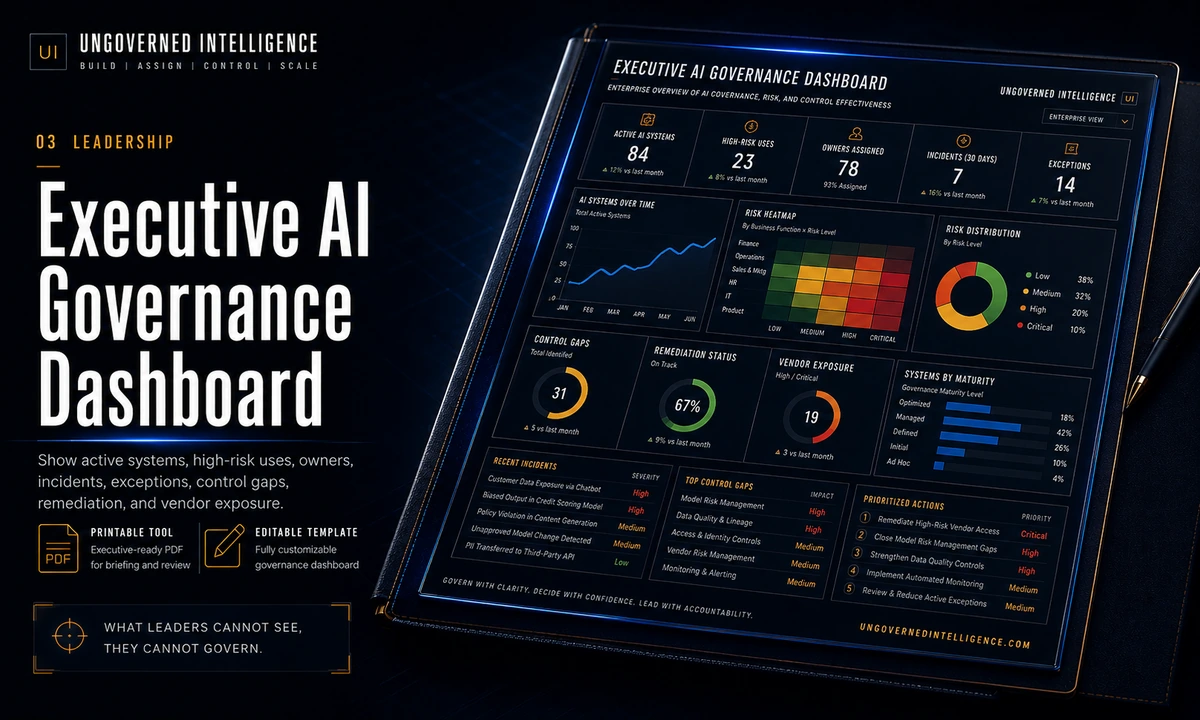
Show active systems, high-risk uses, owners, incidents, exceptions, control gaps, remediation, and vendor exposure.
Companion download
Use the toolkit to make leadership decisions visible: what matters, who owns it, what evidence exists, what controls apply, and what the institution will do next.
01
Data foundation
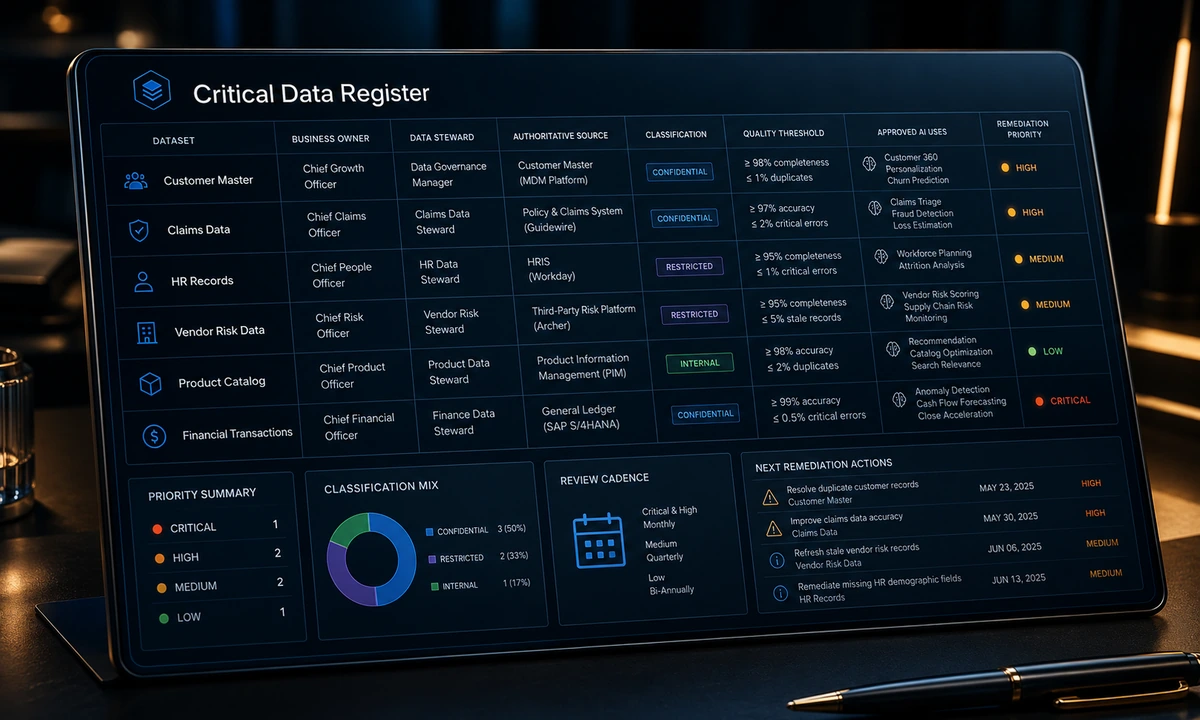
Map critical datasets, owners, authoritative sources, classifications, quality thresholds, approved AI uses, and remediation priority.
Companion download
02
Data foundation
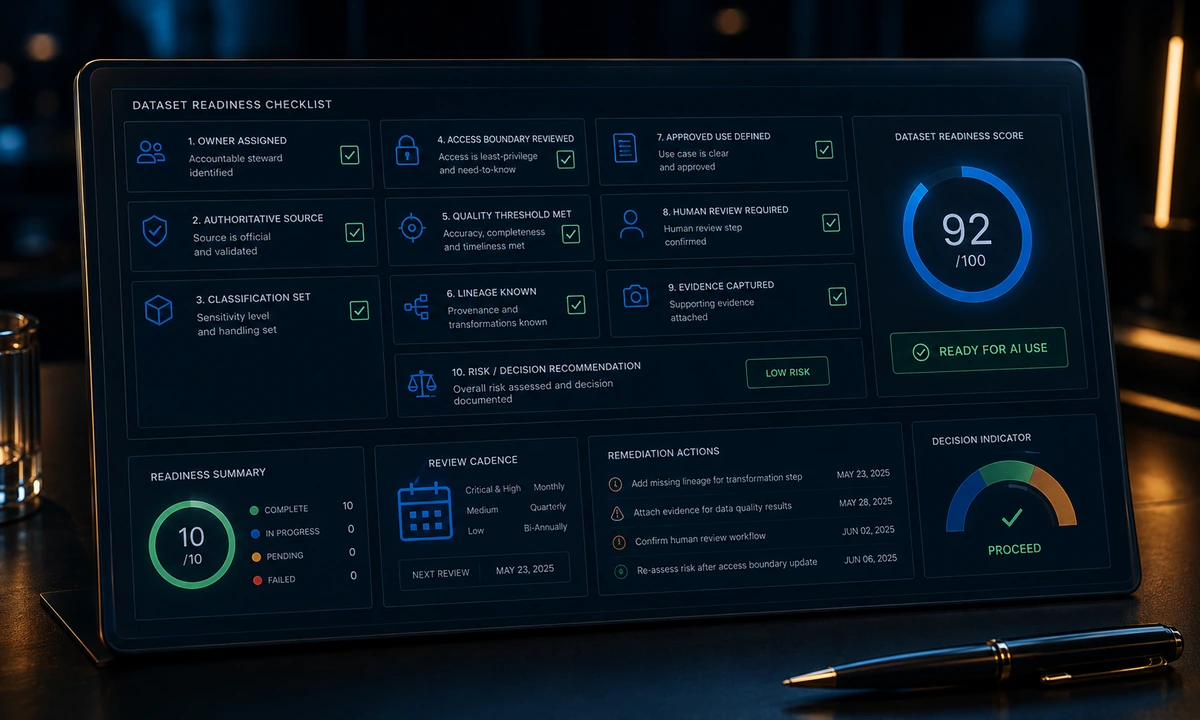
A fast leadership test before a dataset supports AI retrieval, recommendation, decision support, or action.
Book tool
03
Accountability
Assign executive owner, business owner, data owner, model/application owner, risk owner, escalation path, and pause authority before deployment.
Companion download
04
Accountability
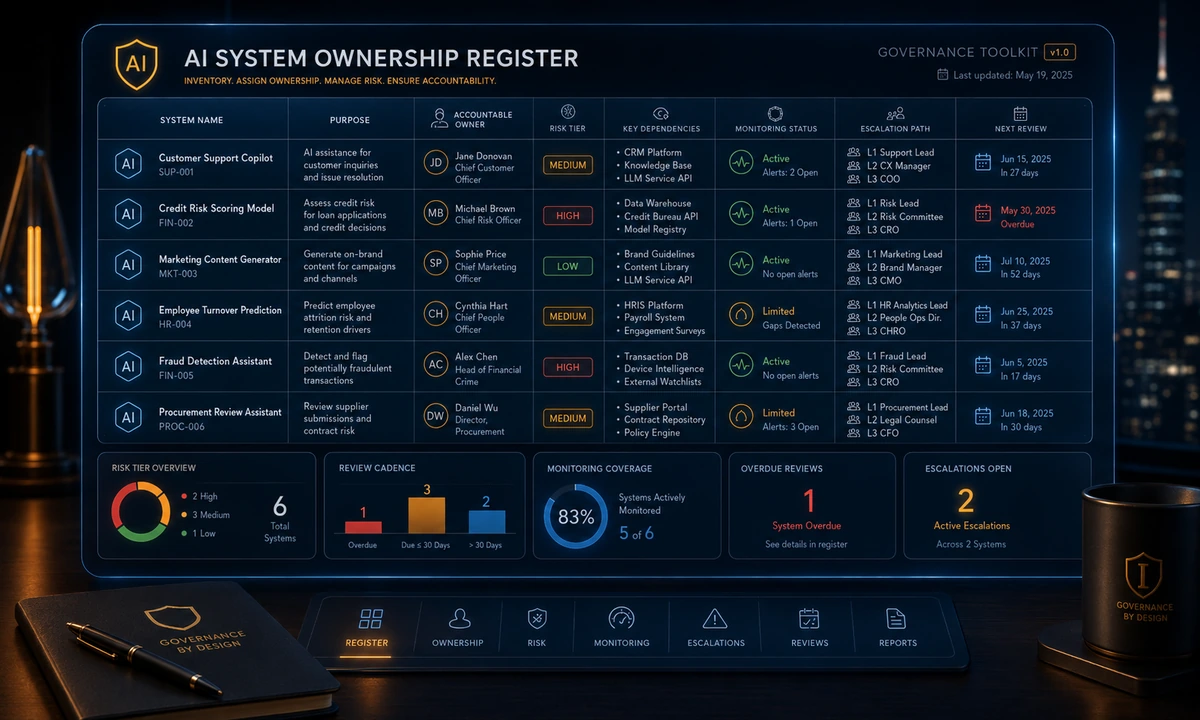
Inventory AI systems with purpose, owner, risk tier, dependencies, monitoring, escalation, and review date.
Toolkit preview
05
Evidence
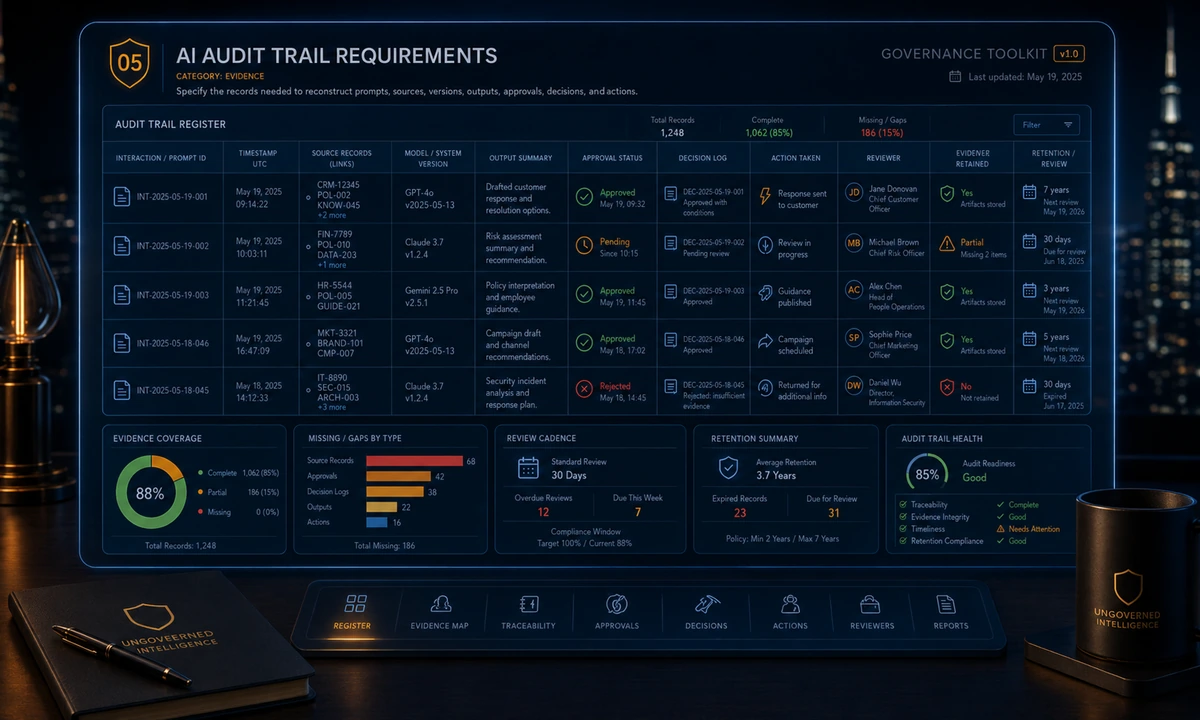
Specify the records needed to reconstruct prompts, sources, versions, outputs, approvals, decisions, and actions.
Book tool
06
Controls
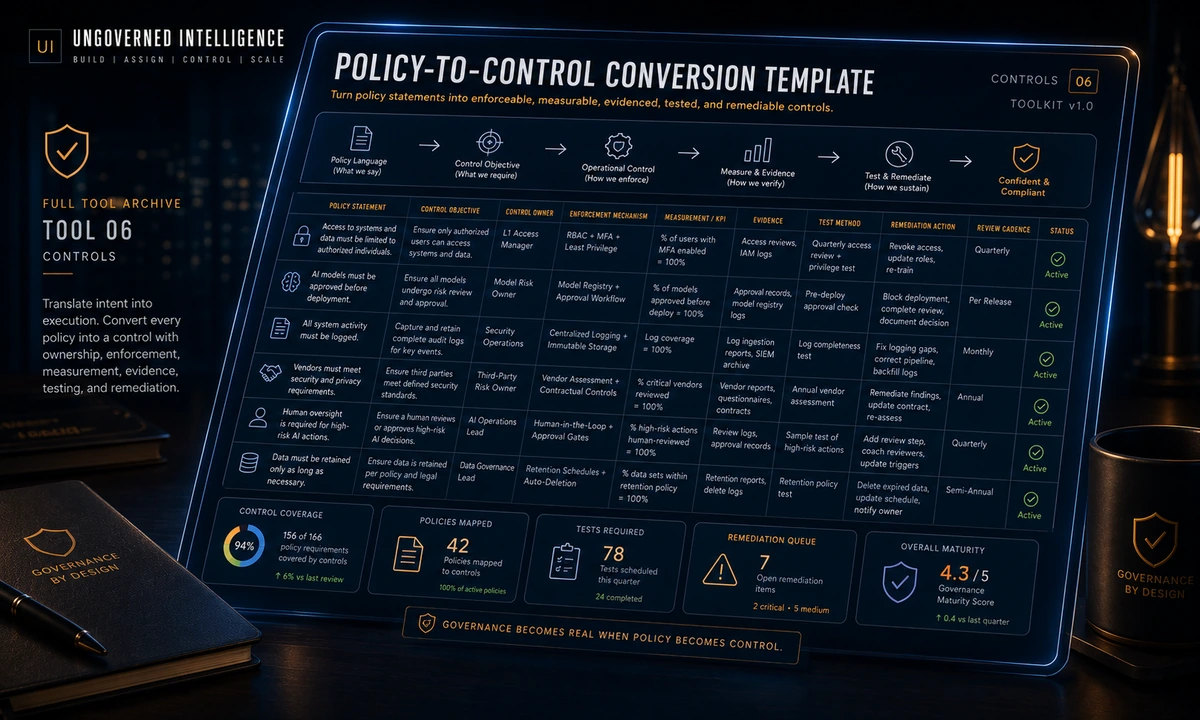
Turn policy statements into enforceable, measurable, evidenced, tested, and remediable controls.
Book tool
07
Trust Stack
Find the weakest governance layer before AI dependence grows around it.
Companion download
08
Agents
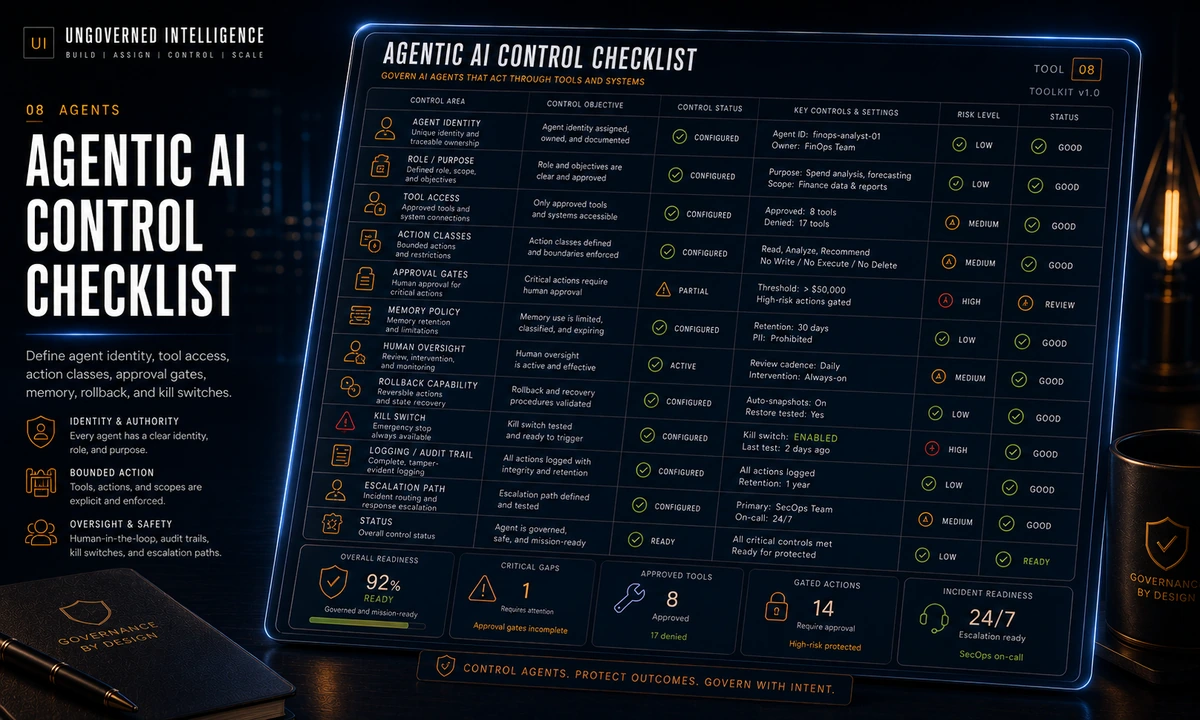
Define agent identity, tool access, action classes, approval gates, memory, rollback, and kill switches.
Companion download
09
Leadership
Show active systems, high-risk uses, owners, incidents, exceptions, control gaps, remediation, and vendor exposure.
Companion download
10
Roadmap
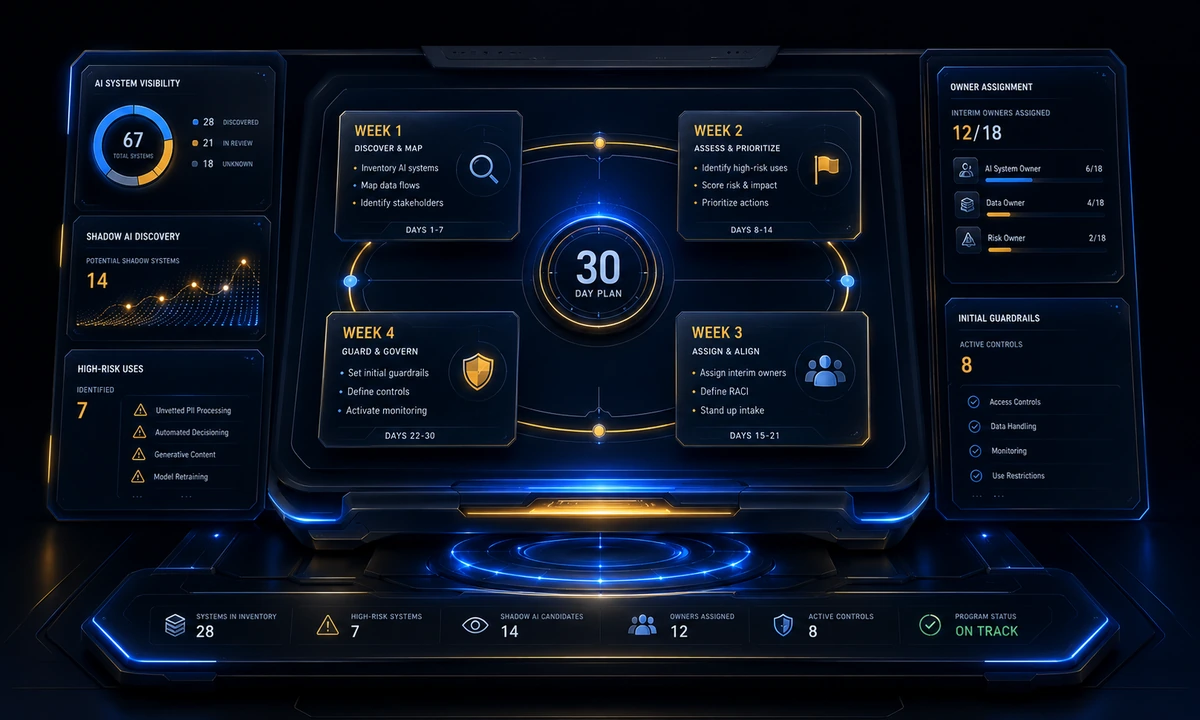
Create visibility, identify high-risk uses, surface shadow AI, assign interim owners, and set initial guardrails.
Book tool
11
Roadmap
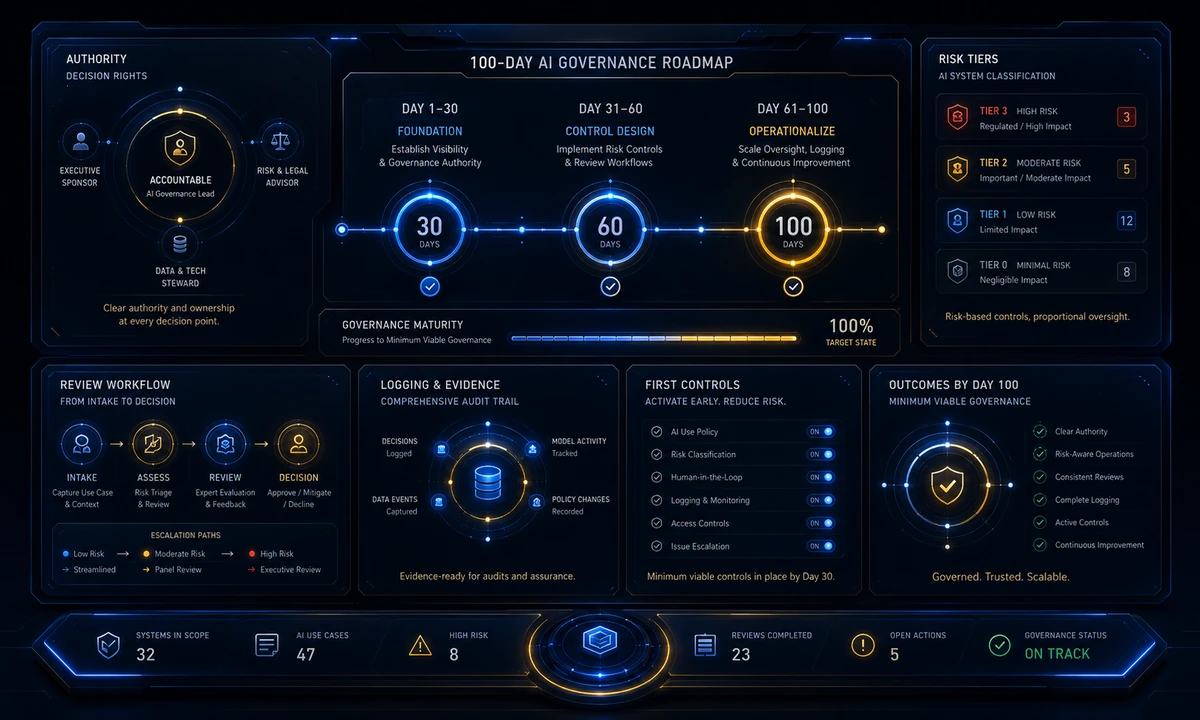
Move from visibility to minimum viable governance: authority, risk tiers, review workflows, logging, and first controls.
Book tool
12
Destination
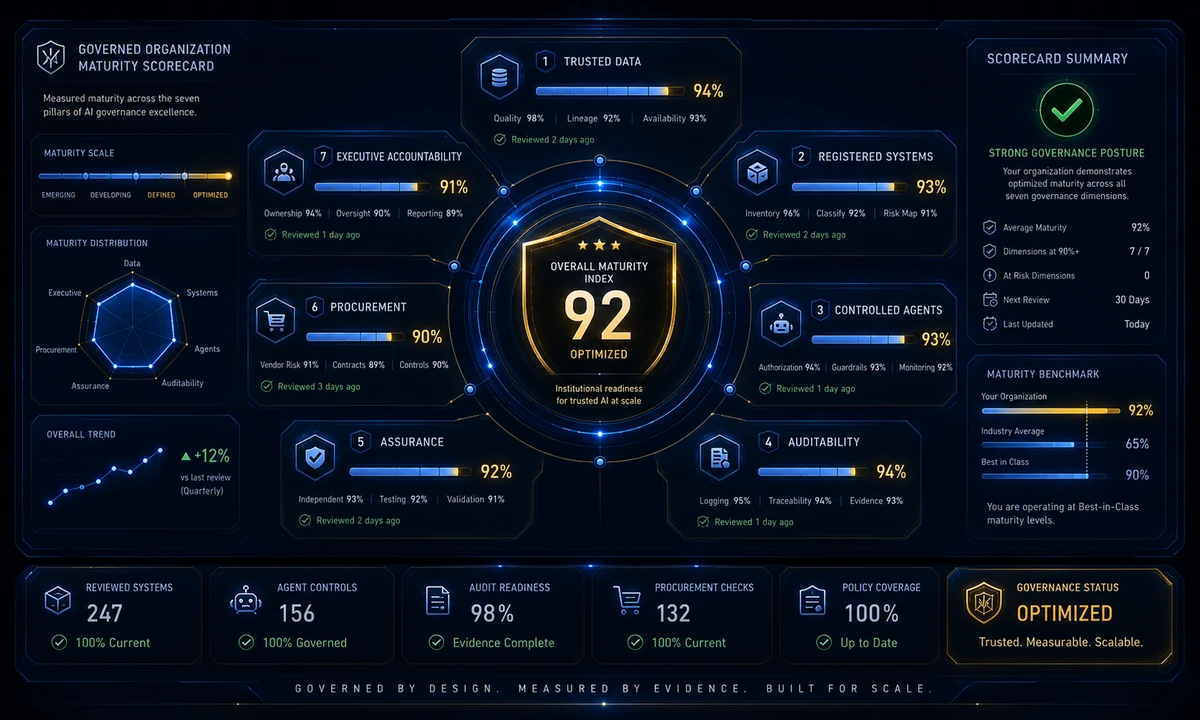
Assess maturity across trusted data, registered systems, controlled agents, auditability, assurance, procurement, and executive accountability.
Toolkit preview
Priority assets will include the Trust Stack Diagnostic, AI Accountability Matrix, Agentic AI Control Checklist, Executive Dashboard, and implementation roadmaps.